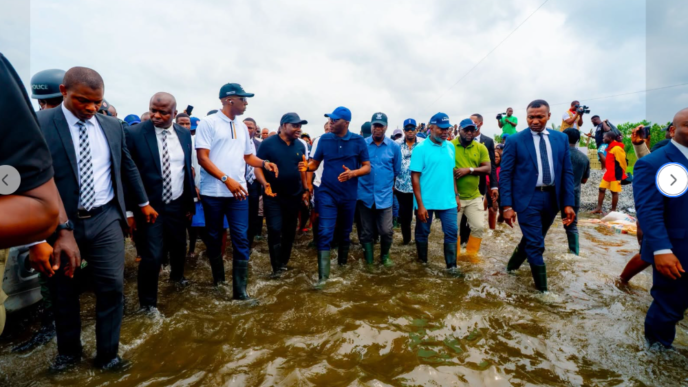

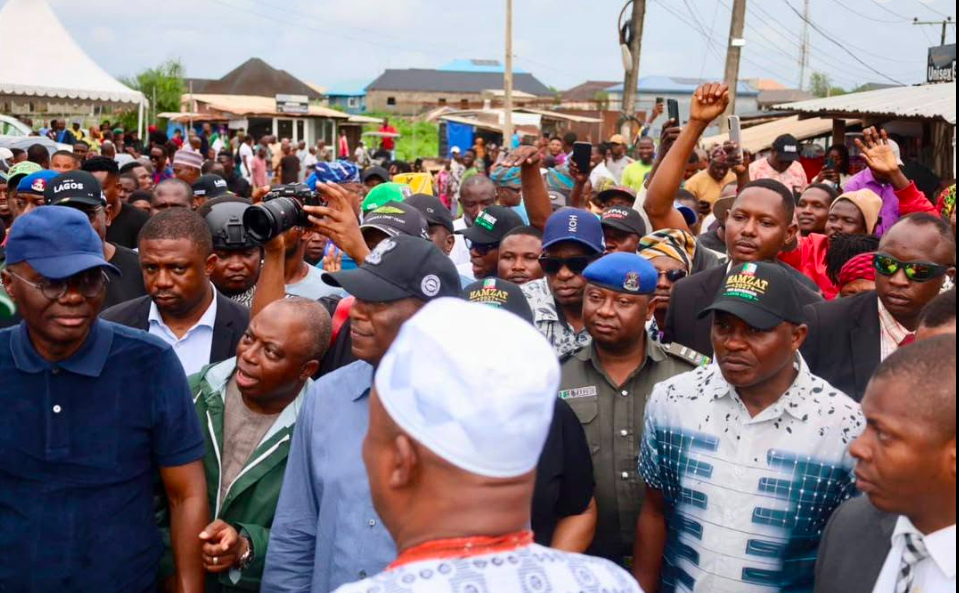
The Executive Chairman of Ibeju-Lekki Local Government, Hon. Abdullahi Sesan Olowa, received Lagos State Governor Babajide Olusola Sanwo-Olu during an inspection of flood-affected communities in Gbetu-Iwerekun as efforts intensified to address flooding in the area.
Epe Insights reports that Governor Sanwo-Olu was accompanied by the Deputy Governor, Dr. Obafemi Hamzat, and the Commissioner for the Environment and Water Resources, Mr. Tokunbo Wahab, as the Lagos State Government continued its assessment of flood-prone communities following recent heavy rainfall.
The inspection formed part of the state’s ongoing flood response strategy aimed at identifying immediate and long-term measures to improve drainage systems and strengthen flood resilience across vulnerable communities.
Hon. Olowa welcomed the Governor and members of his delegation, expressing appreciation for the state government’s prompt attention to the flooding challenges affecting Gbetu-Iwerekun and other parts of Ibeju-Lekki.
The Executive Chairman said collaboration between the state and local governments remains essential to addressing environmental challenges and protecting lives, property and public infrastructure.
During the inspection, Hon. Olowa guided Governor Sanwo-Olu and other officials through several flood-affected locations within the community.
He provided a detailed overview of the extent of the flooding, highlighting its effects on residents, motorists, businesses and daily economic activities.
The Chairman also explained the environmental characteristics of Gbetu-Iwerekun, noting that the community’s terrain and drainage limitations contribute to flooding during periods of heavy rainfall.
According to him, sustained investment in drainage infrastructure and water management remains critical to reducing the impact of flooding across the local government.
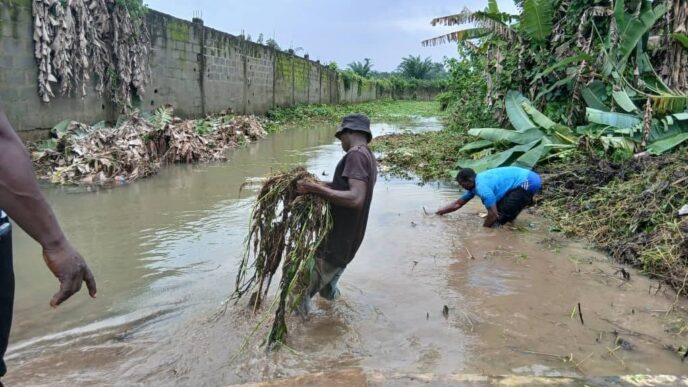
Governor Sanwo-Olu inspected drainage channels, waterways and other critical locations to assess conditions on the ground and evaluate the interventions required.
The Governor reaffirmed the Lagos State Government’s commitment to implementing practical and sustainable solutions that will improve water flow and minimise flood risks.
He noted that continuous assessments remain important in ensuring that government interventions effectively address the challenges faced by affected communities.
The inspection also provided an opportunity for officials to engage with residents and obtain firsthand information about the impact of the flooding.
Community members welcomed the state government’s visit, expressing optimism that the assessment would accelerate the implementation of lasting flood control measures.
Residents highlighted concerns over blocked drainage channels, rising water levels and the disruption caused by persistent flooding during the rainy season.
Officials from the Ministry of the Environment and Water Resources participated in the exercise by assessing drainage infrastructure and identifying areas requiring urgent intervention.

The inspection aligns with the Lagos State Government’s broader commitment to improving environmental management and strengthening climate resilience across the state.
Environmental experts have continued to emphasise the importance of effective drainage systems, routine maintenance and coordinated planning in reducing the impact of flooding in rapidly developing communities.
Hon. Olowa reaffirmed his administration’s commitment to working closely with the Lagos State Government and relevant agencies to ensure that identified projects are implemented for the benefit of residents.
He assured members of the community that the local government would continue supporting ongoing flood response efforts while advocating for long-term infrastructure improvements.
The visit underscored the importance of collaboration between different levels of government in addressing environmental challenges. With assessments ongoing, residents remain hopeful that the proposed interventions will improve drainage infrastructure, enhance water flow and provide lasting relief from flooding across Gbetu-Iwerekun and other vulnerable communities in Ibeju-Lekki.