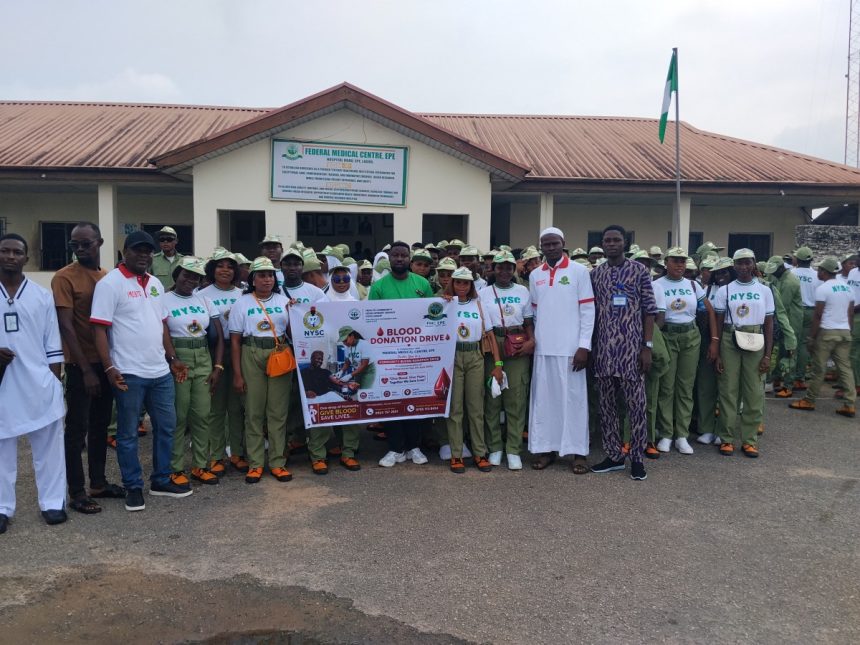
Members of the National Youth Service Corps (NYSC) serving in Epe Local Government have participated in a voluntary blood donation exercise at the Federal Medical Centre (FMC), Epe, in support of lifesaving healthcare services.
Epe Insights reports that the exercise formed part of the hospital’s 2026 Blood Donation Week and the NYSC Community Development Service (CDS), reflecting the corps members’ commitment to humanitarian service and community development.
The blood donation campaign attracted scores of willing donors who voluntarily donated blood to strengthen the hospital’s blood bank and support patients requiring emergency transfusions.
Management of FMC Epe commended the corps members for their selfless gesture, describing voluntary blood donation as a critical intervention that saves lives during medical emergencies, major surgeries, childbirth and the treatment of accident victims.
Hospital officials noted that maintaining an adequate blood supply remains one of the greatest challenges facing healthcare facilities, making regular voluntary donations essential to quality healthcare delivery.
Medical experts at the event explained that a single unit of donated blood can save up to three lives through the separation of blood into different components used to treat patients with varying medical conditions.
They encouraged healthy Nigerians to make voluntary blood donation a regular habit, stressing that consistent donations help ensure blood is readily available whenever emergencies arise.
The experts also reassured prospective donors that the donation process is safe, professionally supervised and beneficial to both recipients and eligible donors when carried out under proper medical guidelines.
NYSC officials praised the corps members for demonstrating the core values of the National Youth Service Corps through acts of compassion, national service and community engagement.
They noted that Community Development Service remains one of the scheme’s key pillars, providing corps members with opportunities to address societal needs through meaningful volunteer activities.
Some participating corps members described the exercise as a rewarding experience, saying they were motivated by the opportunity to contribute to saving lives and supporting healthcare delivery within their host community.
Beneficiaries of previous blood donation campaigns have often relied on voluntary donors during medical emergencies, underscoring the importance of sustained public participation in blood donation initiatives.
The hospital reiterated its commitment to promoting awareness on the importance of voluntary blood donation through regular campaigns, public education and strategic partnerships with organisations and community groups.
Stakeholders at the event called for greater collaboration between healthcare institutions, youth organisations and the public to build a sustainable culture of voluntary blood donation across the country.
The successful exercise highlights the vital role young people continue to play in supporting public health initiatives while reinforcing the values of service, compassion and national unity that define the NYSC scheme.