
Lekki LCDA has intensified efforts to improve environmental cleanliness with the launch of a renewed sanitation advocacy drive.
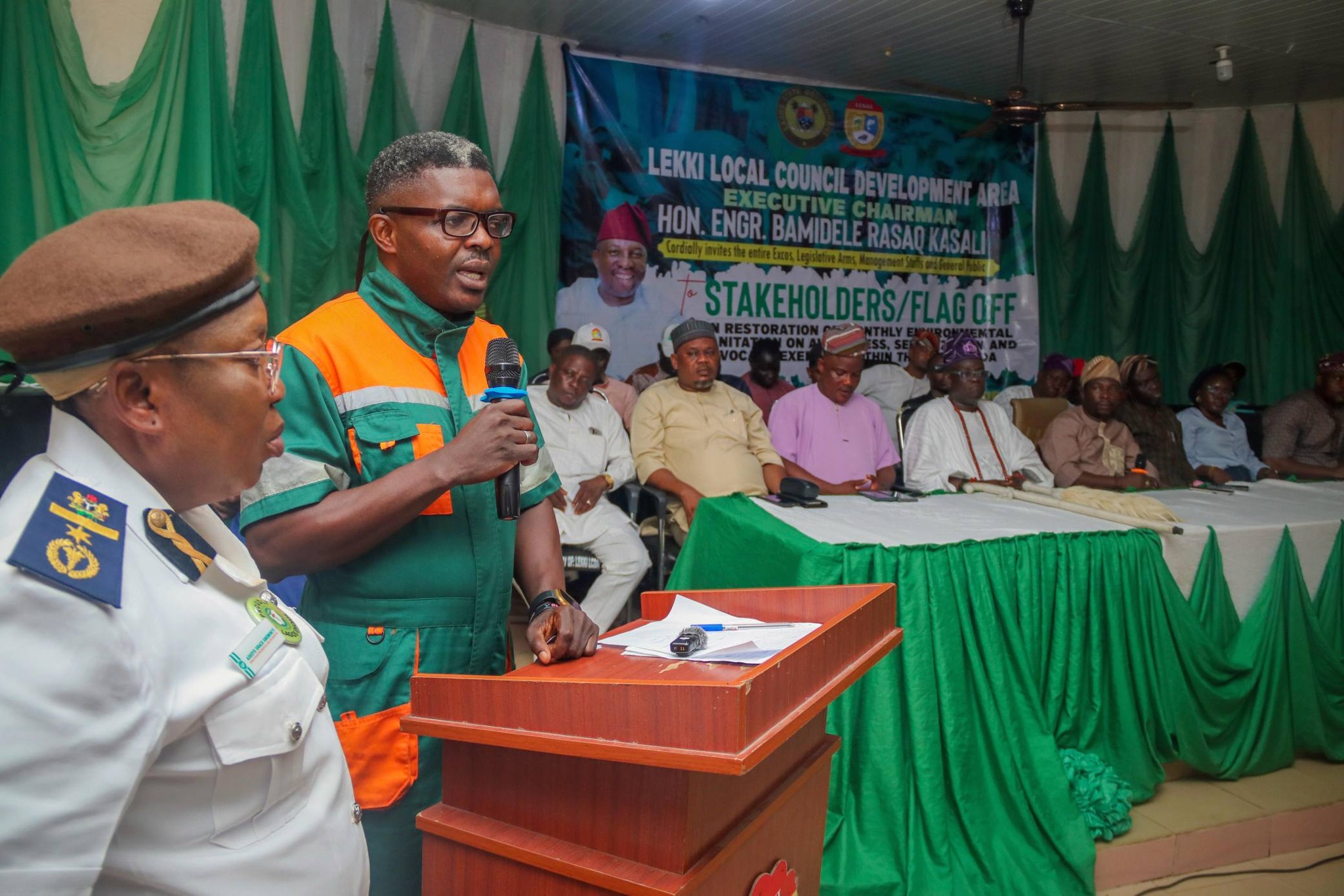
Epe Insights reports that the Executive Chairman, Rasaki Bamidele Kasali, convened a high-level stakeholders’ meeting at the LCDA Secretariat to officially flag off the Monthly Environmental Sanitation Advocacy Exercise.
The initiative is aimed at promoting a cleaner and healthier environment. Authorities say it reflects a stronger commitment to sustainable community development.
During the meeting, the chairman stressed strict enforcement of environmental laws. He warned that violators would face arrest and possible prosecution.
He emphasized that compliance is no longer optional. Residents are expected to adhere to sanitation regulations across all communities.

The council outlined new measures to support the initiative. These include the deployment of incinerators in strategic locations.
Efforts are also underway to clear illegal shanties. This is part of broader actions to improve environmental conditions.
Waste management infrastructure is being expanded. General waste bins will be distributed across neighborhoods.
The chairman called on residents to take responsibility. He urged them to maintain cleanliness within their surroundings.
He also encouraged community participation. Residents were asked to act as partners in monitoring environmental compliance.
Authorities warned against assault on environmental officers. Such actions, they said, will attract strict penalties.
Plans have been announced to introduce vigilante teams. These groups will support enforcement and monitor activities.
Officials say the move will strengthen oversight. It is expected to improve adherence to sanitation rules.

The council reiterated its zero-tolerance stance. No individual found violating regulations will be exempted.
Stakeholders at the meeting expressed support. Many acknowledged the need for stricter environmental control.
Community leaders were urged to sensitize residents. Awareness campaigns are expected to complement enforcement.
Observers note that urban growth has increased waste challenges. Stronger policies are seen as necessary.
The initiative aligns with broader public health goals. Clean environments help reduce disease risks.
Residents are expected to benefit from improved sanitation. Better waste management enhances quality of life.
The council reaffirmed its commitment to sustainability. Long-term environmental management remains a priority.
As implementation begins, authorities are focusing on compliance. The success of the initiative depends on collective effort.