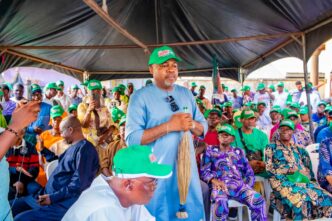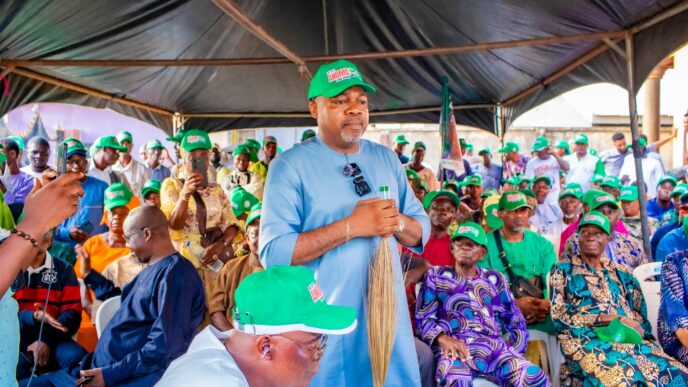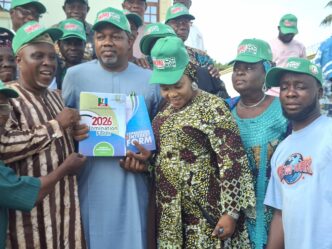

The contest for the House of Representatives ticket of the All Progressives Congress in Epe Federal Constituency is shaping into a choice between two distinct governance paths.
Epe Insights reports that the contest between Saidat Olayinka Oladunjoye and Wale Raji Anomo is generating intense debate across party lines and grassroots communities.
Barr. Saidat Olayinka Oladunjoye and Wale Raji Anomo have both declared interest in the 2027 House of Representatives race.
Both aspirants bring established public service records to the contest.
Their backgrounds reflect different approaches to leadership and representation.
Oladunjoye’s career spans law, insurance, and public administration.
She was called to the Nigerian Bar in 1999 and trained at the University of Lagos.
Her professional experience includes leadership roles in the private sector.
She later transitioned into public service at the state level.
Between 2011 and 2015, she served as Lagos State Commissioner for Education.
During that period, several education projects were delivered across Epe Division.
These included classroom construction, hostel renovations, and laboratory upgrades.
Perimeter fencing and water projects were also executed in multiple schools.
Furniture supply was extended across education districts serving the area.
She later served as Commissioner for Commerce and Industry.
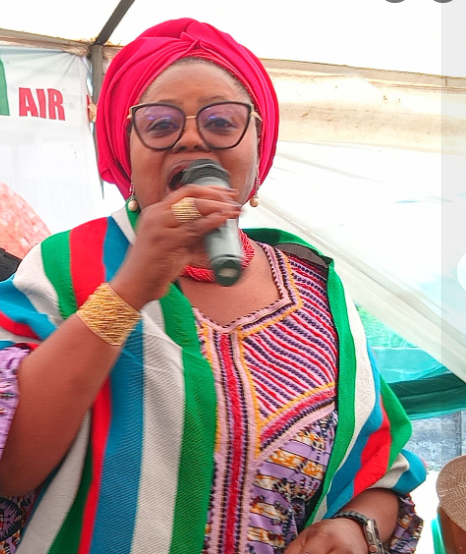
Her political experience includes a role as APC Lagos East Vice Chairman.
She currently serves at the National Population Commission as Federal Commissioner.
The role provides access to population data and development planning insights.
Her campaign emphasizes legislative capacity and federal engagement.
She has highlighted lawmaking, oversight, and attracting federal projects as priorities.
Her consultations include meetings with political stakeholders across Epe.
She has also engaged Apex Leaders to outline her vision.
On the other hand, Anomo’s experience is rooted in local governance.
He currently serves as Executive Chairman of Ikosi-Ejinrin Local Council Development Area.
His administration focuses on infrastructure and social services delivery.
A major initiative under his leadership is road rehabilitation.
Over 20 roads have been graded across wards within the LCDA.
The programme is expected to extend to over 100 roads.

Community Development Associations play a role in identifying priority areas.
This approach ensures community participation in project execution.
Another initiative is the Free School Bus Shuttle programme.
The scheme supports pupils facing long and unsafe commutes.
It has reportedly improved school attendance in affected areas.
Additional roads graded include routes in Agbowa and Owu-Ikosi.
Anomo’s campaign highlights ongoing project delivery and grassroots engagement.
His leadership approach emphasizes direct intervention at community level.
The APC primary will be influenced by several key factors.
Delegates are expected to assess legislative competence of aspirants.
Experience in policy and governance remains a central consideration.
Constituency structure and political networks will also play a role.
Epe Federal Constituency includes multiple towns and communities.
Each aspirant brings different levels of influence across these areas.
Oladunjoye’s network spans statewide party structures.
Anomo’s support base is anchored within LCDA grassroots systems.
Another factor is demographic representation.
No woman has represented Epe at the House of Representatives.
This has featured in Oladunjoye’s stakeholder engagements.
Both aspirants continue consultations with party leaders and delegates.
Campaign activities are expected to intensify ahead of the primaries.
The APC primary is projected to hold in May 2026.

The outcome will determine the party’s candidate for the general election.
The seat is currently held by Wale Raji.
Observers say the race presents a contrast in governance styles.
One model is driven by policy development and institutional experience.
The other is defined by direct service delivery and grassroots operations.
The decision will reflect how delegates weigh these approaches.
The contest remains one of the most closely watched in Epe politics.
Stakeholders expect a competitive and strategic primary process.