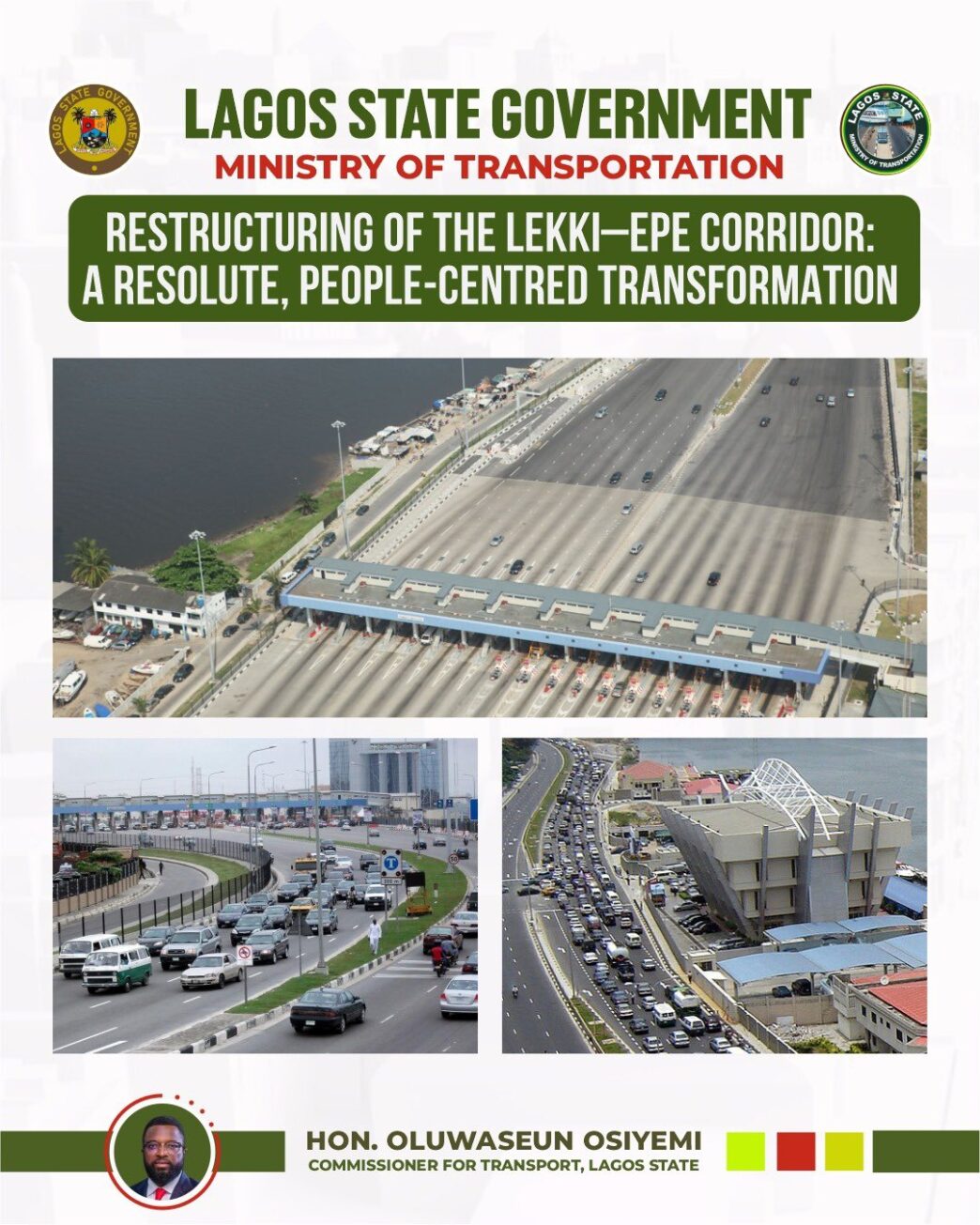
The Lagos State Government will commence a new regulated bus service along the Lekki–Epe corridor on 8 December, marking a significant upgrade in public transportation across the rapidly developing axis.
Epe Insights reports that the initiative is the first phase of the Lekki–Epe Bus Reform Scheme, led by the Lagos Metropolitan Area Transport Authority (LAMATA). The programme aims to improve mobility, enhance safety, and restore order along one of the state’s busiest growth corridors.
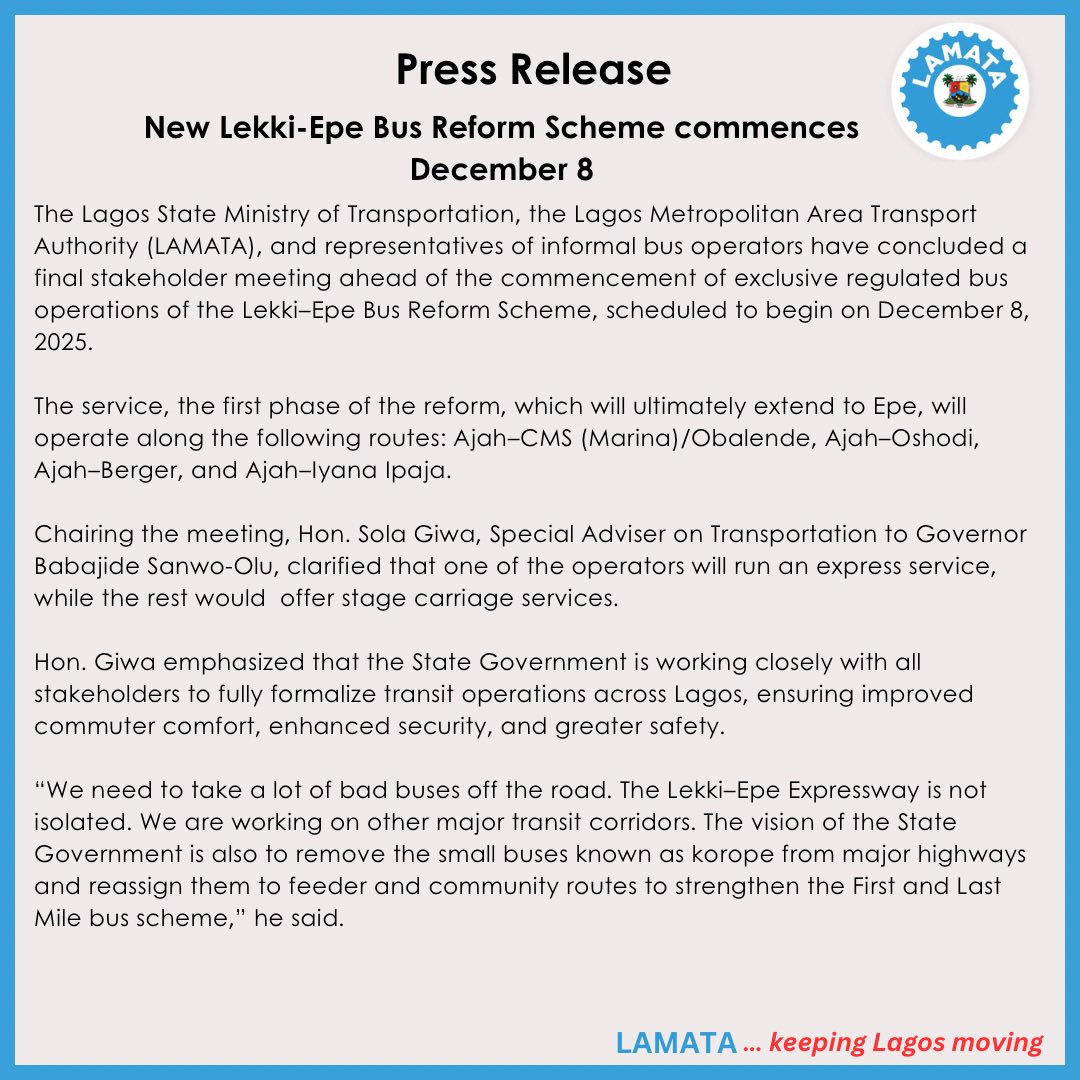
A total of 229 high- and medium-capacity buses will begin operations under a structured regulatory framework. Commuters will benefit from defined routes, transparent fares, digital payment systems, and more reliable travel times.
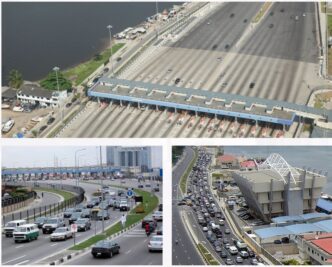
The Lekki–Epe corridor has faced increasing strain due to rising population figures, extensive construction activity, and limited formal transportation options. More than two million passengers now rely on the route daily, linking residential communities to major employment centres.
Until now, private cars and informal buses such as korope and danfo have dominated movement along the axis. These vehicles often draw complaints over irregular stops, unstable pricing, discomfort, and recurring safety issues.
The new reform seeks to address these challenges by introducing modern buses with higher passenger capacity, increasing efficiency and reducing congestion along the corridor.
LAMATA stated that services will run on major routes, including Ajah–CMS/Marina, Ajah–Obalende, Ajah–Oshodi, Ajah–Berger, and Ajah–Iyana Ipaja. The scheme will feature both express and stage-by-stage options to meet diverse commuter needs.
All buses will operate with Lagos’ official blue-and-white regulated colours and display PTCS verification stickers, fleet identification codes, and Touch and Pay (TAP) markers for easier transactions.
A major component of the reform is its cashless policy anchored on the Cowry card. The state government warned that cash payments are strictly prohibited and that violators will face sanctions.
Special Adviser to the Governor on Transportation, Hon. Sola Giwa, said the state is working closely with transport unions to gradually phase out ageing minibuses from major highways and redirect them to community-level feeder routes under the First and Last Mile initiative.
The Lekki–Epe rollout builds on earlier reforms such as the BRT network and regulated services on routes connecting TBS, Ikorodu, Marina, Ikeja, and Egbeda, which have already reduced travel time by up to 30 percent in some areas.
With 229 buses deployed, the state is taking a major step toward stabilising transportation along the Lekki–Epe axis, one of Lagos’ most congested and economically strategic corridors.
The reform is expected to deliver long-term gains, including reduced traffic volume, enhanced commuter safety, improved journey predictability, and more transparent fare systems backed by reliable digital payments.