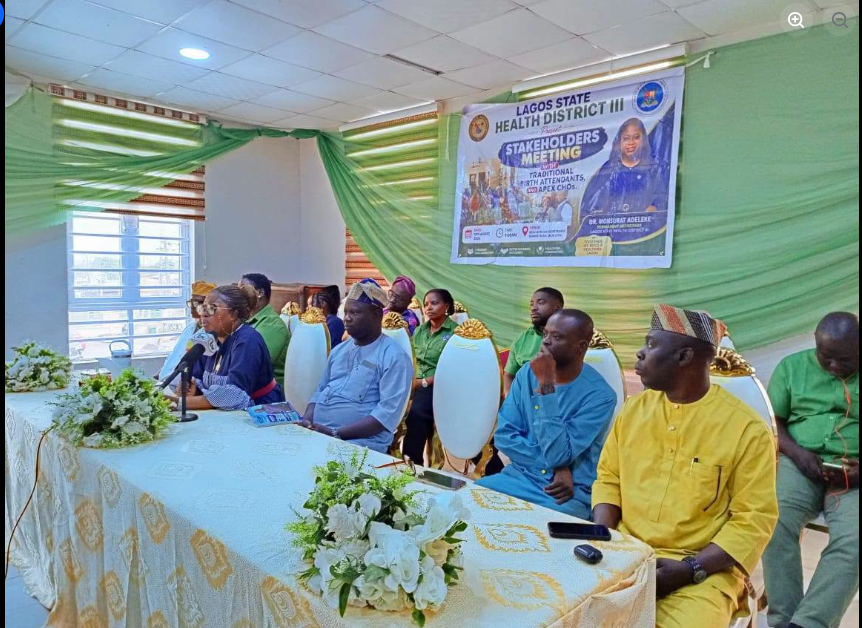
The Lagos State Government, through Health District III, has urged Traditional Birth Attendants (TBAs) and healthcare workers to strengthen collaboration to improve maternal and newborn health outcomes across communities.
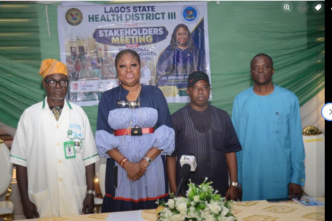
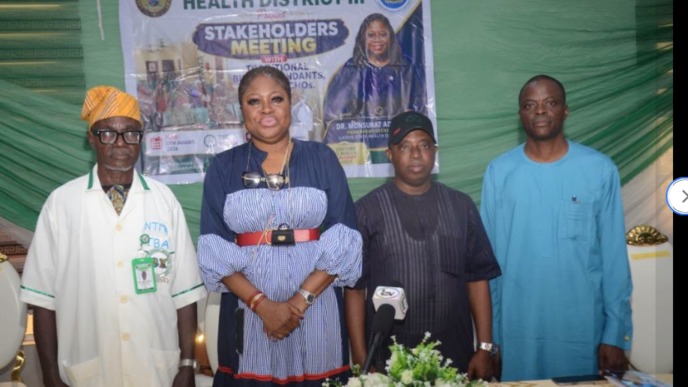
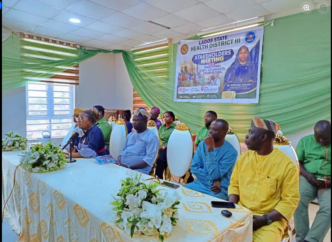
Epe Insights reports that the call was made during a stakeholders’ meeting held at the Ibeju-Lekki Local Government Secretariat, Ibeju, where officials reviewed the performance of TBA services and discussed ways to reduce preventable maternal and newborn deaths.
The Permanent Secretary, Health District III, Dr. Monsurat Adeleke, disclosed that TBA services recorded a decline between January and July 2026 compared with the corresponding period in 2025.
According to Adeleke, new antenatal registrations among TBAs dropped by 31.9 percent, from 1,594 in 2025 to 1,085 in 2026.
She also disclosed that old antenatal registrations declined from 3,152 to 1,901 during the period under review.
TBA-assisted deliveries equally recorded a significant reduction, falling by 36 percent from 1,308 in 2025 to 837 between January and July 2026.
The health official said the figures raised questions about whether more pregnant women were now accessing conventional healthcare facilities or whether some women were avoiding care altogether.
She explained that the stakeholders’ meeting was organised to better understand the trend and identify practical measures to improve maternal healthcare.
Adeleke acknowledged the level of trust many women have in Traditional Birth Attendants within their communities.
She said this relationship could be used positively to improve referrals and ensure that pregnant women receive timely medical attention when complications arise.
The Permanent Secretary urged TBAs to promptly refer pregnant women who show signs of danger during pregnancy, labour or delivery.
She identified heavy bleeding, prolonged labour, high blood pressure and convulsions among the warning signs requiring immediate referral to healthcare facilities.
Adeleke stressed that delays in referring women experiencing complications could have serious consequences for both mothers and newborns.
She therefore encouraged TBAs to work closely with trained healthcare professionals when managing cases.
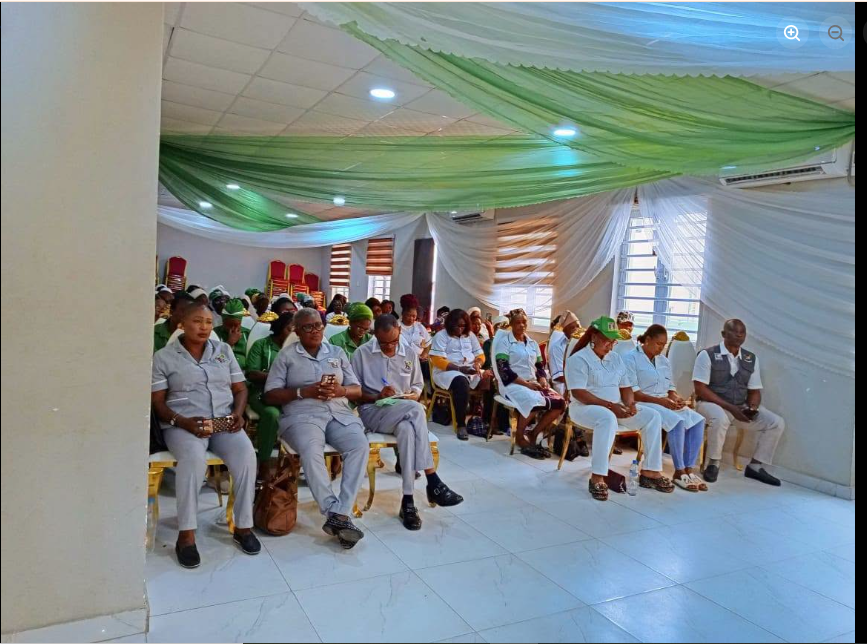
The Permanent Secretary also charged healthcare workers to receive referred patients appropriately and treat TBAs with respect.
She called for effective communication between health workers and TBAs to ensure that referrals are properly managed.
According to her, a strong referral system can help bridge the gap between community-based care and formal healthcare facilities.
Adeleke expressed optimism that stronger collaboration between TBAs and healthcare workers would contribute to reducing avoidable maternal and newborn deaths.
She emphasised that every referral should be treated with urgency because it involves more than a medical case.
“I want us to always bear in mind that behind every referral is a woman, a baby and a family,” she said.
The statement highlighted the human impact of delays in accessing emergency maternal and newborn care.
The Lagos State Government is also working with other stakeholders to address transportation challenges faced by women in labour.
Adeleke disclosed that the state is partnering with the Federal Government and the National Union of Road Transport Workers (NURTW) through the MAAMI programme.
The initiative is designed to ensure that women in labour can be transported to healthcare facilities without unnecessary delays.
The Permanent Secretary explained that timely transportation remains an important part of preventing complications during childbirth.
She urged stakeholders to make effective use of available emergency transportation support whenever necessary.
Adeleke also reminded residents that the Lagos State Ambulance Service, LASAMBUS, operates around the clock.
She said members of the public can access the emergency ambulance service by calling 112.
The availability of a 24-hour emergency response service, she noted, provides another avenue for pregnant women and families to obtain urgent medical assistance.
The stakeholders’ meeting brought attention to the need for stronger links between community-based birth attendants and formal healthcare institutions.
TBAs remain trusted figures for many women, particularly within communities where traditional birth services are easily accessible.
The state government is seeking to ensure that this trust supports, rather than hinders, access to appropriate medical care.
Adeleke encouraged TBAs to see healthcare facilities as partners in protecting mothers and babies.
She also urged healthcare workers to maintain open communication channels with TBAs to facilitate effective referrals.
The approach is expected to help identify complications early and improve the chances of positive outcomes.
The decline in TBA registrations and deliveries also provides an opportunity for health authorities to assess changing patterns in maternal healthcare utilisation.
The state government wants to determine whether the decline reflects increased use of healthcare facilities or gaps in access to care.
Understanding the trend could help health authorities develop more targeted interventions for pregnant women across Lagos communities.
Adeleke said all stakeholders have a role to play in improving maternal and newborn health.
She encouraged TBAs, healthcare workers, transport operators and community leaders to work together toward the common goal of saving lives.
The Permanent Secretary also emphasised the importance of quick action whenever danger signs are identified.
She noted that early referral can make a significant difference in emergency maternal healthcare situations.
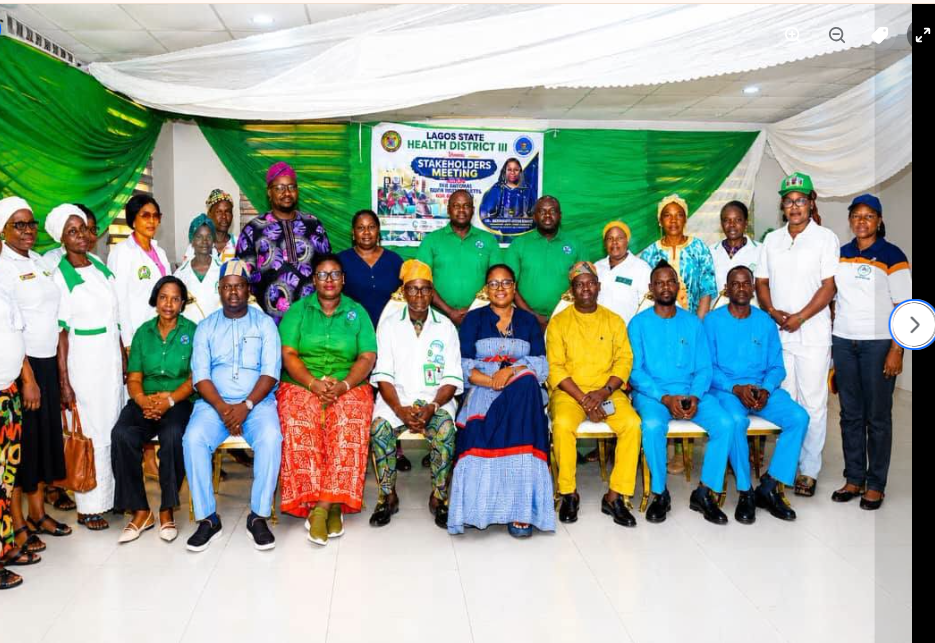
The state government’s engagement with TBAs forms part of broader efforts to strengthen healthcare delivery at the community level.
Through collaboration and effective referrals, health authorities hope to reduce delays and improve access to professional medical care.
The meeting also reinforced the importance of ensuring that pregnant women and newborns remain at the centre of healthcare interventions.
Adeleke urged participants to sustain the dialogue beyond the stakeholders’ meeting.
She expressed confidence that continuous engagement would strengthen relationships and improve referral outcomes.
The Health District III leadership also encouraged residents to seek appropriate medical assistance whenever complications arise.
Families were reminded not to delay in seeking emergency help when the health of a mother or newborn is at risk.
The Lagos State Government reiterated its commitment to improving maternal and newborn health outcomes across the metropolis.
With stronger collaboration among TBAs, healthcare workers and other stakeholders, the government hopes to prevent avoidable deaths and ensure safer childbirth for women across Lagos.